Sunday, March 17, 2019

Random Photos


This is Sandy Point (I think), where Sara and Mike brought their kids when they were young. 


This is inside a shearing shed, showing the pens that are used to control the movement of the sheep as they wait to be sheared.


The top half of this building is slid back before a delivery of phosphorous and potash. The road train hoists its trailer to dump a load in the shed, which will later be spread on the fields.


This emu was made by a local man out of old machinery part. Amazing.


This is a field bin which is moved empty to the field that is being harvested. The harvester unloads into a chaser wagon or directly into this bin. When the road train comes, it empties the grain into its trailers.


Sara's house is filled with her amazing artwork. This is one of several mosaics in the patio area.


There are many birds on Rubicon....parrots, cockatoos and these white birds, corellas. I may have spelled it wrong. They are considered a nuisance and they squawk all the time.


At a local farm, this truck was hauling away a tractor that needed working on.


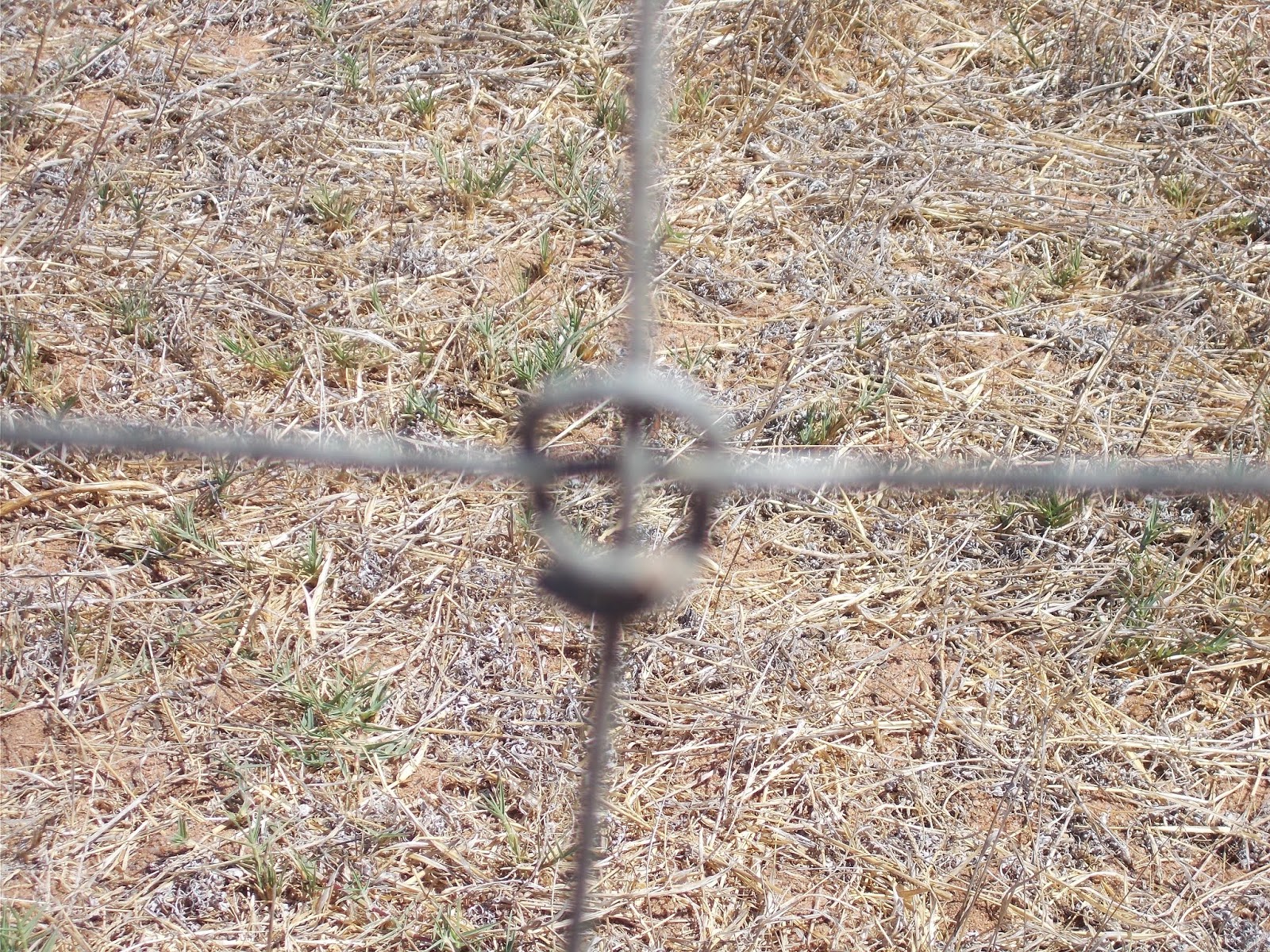
This is the type of fence used in paddocks. The wire is held together by these loops of wire.


These melons grow in many places but are a weed and a nuisance. Animals won't eat them. One farmer had a man from South Africa working for him who wouldn't believe that people couldn't eat them. He pestered the owner so much that he cut a piece for the visitor to try. The South African couldn't get the taste out of his mouth for two days.


There are a lot of windmills, but many pumps are now run by solar power as few people can fix the windmills.

...and at last...kangaroos!


Seeing a kangaroo is on the top of the list for most visitors to Australia. I was no different. Fortunately, I was able to see two the first day in Perth. After I reached Rubicon, I kept looking around and looking around for them. The day Mike and I were feeding the sheep (well, he was doing all the work and I was taking all the pictures), when we were in the wooded area, suddenly, there they were! First, there we spotted one, then two, then five. Unfortunately, there were not as obliging as the two in Perth and I couldn't even get my camera aimed before they bounded off.

That evening, we saw some a little closer up in the headlights of the car as they jumped across the road in front of our vehicle. Again, no pictures.

The next day, Sara took me to Mike's sister and brother-in-law's farm, Wuthering Heights, which usually had an abundance of kangaroos. Sara looked in the usual places and, alas, none were to be seen. We went to the house for a nice visit and a cup of tea. Soon, we were all in a SUV bouncing over the fields. What was that in the distance? Could those little dots be kangaroos?


Look closely.


Once we spotted the first few, we then saw 2, 3, 4, 5 or 6 under each tree! We were still too far away for a good closeup and the engine noise was disturbing their afternoon snooze. We kept driving around and around to try to get the kangaroos acclimated to us. Finally, two stopped to stare at us with curiosity...or was it annoyance that we'd disturbed their nap? For a long while, we stared at them and they stared at us. They didn't pull out a camera. I did. Ta da!


Dogs, Sheep and Kangaroos continued....

The green machine in the center is the wool press.

400-500 sheep are in a mob in each paddock, where they forage for roughage. Every two or three days, depending on the season, the sheep's diet is supplemented with lupins. At other times, they might be fed hay when food sources are low. Mike's main job on the farm is to decide where and when to move the sheep and to deliver their allotment of lupins to them on the right days. Here is his ute and a wagon which he is filling with lupins from a bin by auger. This is enough lupins for one mob. Lupins look like a soybean that is speckled brown. It is high in protein, but has lysine, so the sheep only get a certain amount. On the way to the paddock, I was the official gate-opener. I'm an expert. I was perplexed that the gate was left open for our return, but he assured me the sheep were far away from the gate and wouldn't see that it was open and run out. When we found the sheep, they knew what the sound of the truck meant and they quickly ran toward us to feed.

I don't think this video will work. Okay, just envision hundreds of sheep rushing up to eat...


Note the row of brown lupins on the ground.

The next task was to muster the sheep, and then move them. In the early days, this would have been done by horses or by motor bikes. Nowadays, it is done with a four-wheeler/quad bike or a John Deere Gator. The Kenny's dog's name is Jasper and he is devoted to Mike, as evidence by the photo above. 

Later, Jasper was assigned to Sara, but Jasper wasn't too keen with letting Mike leave in the ute without him. Jasper finally consented to riding with Sara as she and I left to guide the sheep. I was assigned the brand new Gator...after all the steering wheel was on "correct" side for me. For the next couple of hours, we gently herded different mobs of sheep to new paddocks. Although it had been many, many decades since I've herded sheep...and that herd was a tenth of the size of each one of these...my memory served me well. Sheep behavior is the same the world over. They will follow each other compliantly, especially when a skilled sheep dog is working them...except for that ONE with an independent streak who suddenly decides, "I think I'll just move to Peru RIGHT NOW!" 

We were doing great, nearing the exit gate when I saw several flashes of black streaking from the left. Uh, oh! Trouble ahead. Sara and Mike's son's dogs had caught wind of the excitement afoot and decided to join the party. Not a good plan! Now, all of the dogs were Kelpies...all the same color. I had no idea which one was Jasper anymore. A few minutes of stern commands ensued and the interlopers were soon relegated to the back of the ute, as in "Ute better get in the back of this truck or ute in trouble!"  


Too many cooks in the kitchen.


When you move sheep, this is your view. You are literally following behinds.
Note sandy soil.


If this doesn't work, envision Jasper skillfully guiding the sheep.

When we were moving one mob, Jasper was assigned to my Gator. The sheep were moving in front of us and Jasper was having a fit. He kept looking back at me as if to say, "I don't know who you are but when are you going to command me to go do my job? Hey! It's my JOB! Huh? Huh? Huh? When are you going to release me?" As we neared the gate, I was unsure of when Jasper was supposed to be "on." He was just about beside himself...barking and attempting to command the sheep from afar. That is when I made a critical mistake, not knowing what his signal were to go to work. I was just trying to comfort him when I said, "You are sure a good dog, Jasper." Well, apparently just saying, "Jasper" was THE command. I'd unwittingly given him permission to herd the sheep. OFF the Gator he flew! BARK! BARK! BARK! In an instant he was behind the sheep darting this way and that way! WOOF! WOOF! WOOF! The sheep, knowing they were in the paws of a master obediently did as they were told and went through the gate. 


In the new paddock, refreshment awaited. Each paddock has a water source for the sheep. They are often "dams" or little ponds of water that fill up during the rains. Ahhhh!


I met with the Badgingarra CWA of WA ladies, along with ladies from some other groups to talk about IAHCE and Illinois. It was followed by a yummy lunch. Was a delightful group!


Sara and I had a short visit to the local school to view her artwork!


Kangaroos will have to wait until tomorrow!

Other blog

I am struggling to keep up with events. I have another blog: deontoaustralia.com. I just realized that it has two posts that are not on this one. I will transfer them if I have time, but you might want to check those out. They are: Kalbarri and Off to Prison. Sorry!

Dogs, Sheep and Kangeroos


It was time to transfer to a new set of hosts. Reluctantly, I left the home of my new friends, Heather and Peter…but I will be able to see them again in Melbourne. Our meeting place to transfer to the new host was at Irwin House, their daughter and son-in-law’s sheep and cattle farm…my first visit to a farm!

Each farm or station has a name, which is posted at their entrance gate. The names are usually kept by new owners of the properties but some change it to fit their own concept of the place.

Touring their homestead was a lesson in the early days of Western Australia. The oldest part of their stunning house dated from 1849 and had been added onto many times since. It had the typical wide veranda often found in Australia. One of the picturesque stone outbuildings had been used by the region’s post office in days gone by and had been turned into a little private farm museum. I felt privileged to get to see the antiques from the early days. 


We took a spin around the acreage…or rather…the hectare-age. (Yeah, yeah, I know that's not a word.) Farms are vast compared to ours in Illinois. One paddock (fenced field) might be the size of our entire farm! We drove past cattle that were an Angus/Santa Gertrudis mix, with a few other genes thrown in. 


After crossing their permanent river, we went past their water tanks. I ask everyone about water. Some areas have aquafers, some have bore holes (wells), and some pump water from far away. To water the animals on this farm, water was pumped into two 30,000 tanks, and then gravity fed to water stations in about 8000 acres.


This farm had gently rolling hills. In addition to cattle, they have about 6000 sheep, if I remember. (If I’m wrong, they are welcome to correct me. As of this writing, I’ve visited three sheep stations and the details are getting mixed up in my head.) Sheep at these stations are most often merino, grown primarily for their fine wool.

This station had blue lupins growing on it. These are not planted nor harvested, however, the sheep can graze on them for a source of protein. To my Illinois eyes, the plant did not look like it could sustain life, but the sheep do quite well eating them.


I was quite interested in their dog, who was at the ready at any moment. This dog had a brown-reddish color. I asked what the breed was…a kelpie and dingo mix! Before I learned about AU, I assumed everyone had one of those Australian black and white longhaired sheep herding dogs. Nope! So far, everyone has had kelpies. I asked this owner about the training of the dog. He said that his philosophy is that the dog already possesses the skills and knowledge needed to be a herding dog. The owner only needs to teach the dog when to do each skill.


My new hosts, Sara and Mike Kenny soon whisked me away for my next adventures. Sara, of course, was the AU lady who came to visit Illinois a year ago and is the organizer of my trip here. On our way to their station, we stopped at Judy and John Brown's Breakaway station, which is 1800 hectares and has about 3000 sheep. They have at least 450 species of wildflowers on The Hill.

(Western Australia is known for their wildflowers but, alas, I am not here during that time. I have gotten a good look at the bush, however, the low scrub tree, bush and plant growth that covered this land. It contains more species of plants per acre than any other place in the world.)

This station gets their water solely from the underground. They have no rain in the summer (December, January and February) so this is a very important source. Their best lambs are shipped live to the USA or Canada. They feel their best employees are their sheep dogs.


Lucky for us, they happened to be shearing that day. As you could imagine, shearing this number of sheep can be a daunting task. There is a raised platform on which four shearers stand. Behind and below their stations are sheep pens, chutes and alleyways to manage the sheep before and after shearing. The station owner provides a motor for each shearer, but each shearer brings their own handpiece. A sheep is grabbed and positioned in a very specific way so that the shearer can control it and it can’t struggle. The shearer has a support that they can lean over as they shear. As you can imagine, this is very hard and demanding work! The boy on the left is 15. The man on the right is the crew boss.

The sheep is sheared very quickly and shoved down a chute to a pen below the platform where it quickly joins its mates in the sheep yard. The fleece is picked up by one of two assistants who spreads it on a slatted table and then keeps the floor tidy. Three other workers quickly pull off soiled wool and inspect the fleece. In an instant, the fleece is shoved into the wool press and packed into a rectangular bag, ready for shipping.

This is repeated 700 times in one day.

The team works for two hours, and then takes a break for half an hour. In the old days, the station fed the workers, who might be there for several days. Nowadays, the crew chief provides the food. One station owner told me that it costs $7-$8 to have a sheep shorn. Half goes to the shearer and the other half pays the rest of the team and covers the other expenses.
On our way home, we stopped at the Pinnacles to watch the sunset over the Indian Ocean. No words needed:


Soon, I was at Sara and Mike’s sheep farm, Rubicon. (I've learned that stations are further east and that one never calls it a "ranch.") Mike had bought the first block of land in the 1950s, and then the couple have expanded it over the years. The land, having been under the sea at one time wasn’t suitable for farming until it was discovered it needed phosphorous, potash and a few other things added. It was covered with bush, which was cleared by pulling a chain between two tractors or by being burned and then cleared. It must have been very hard work!

The land is called a sandy plain. To look at the soil, having come from Illinois with its black soil, one would think, “How could anything grow in this sand?” Hm, that is exactly what I thought! Well, with the soil additives, it grows wheat, canola, lupins (more about those later) and barley quite nicely, thank you! There is not one corn or soybean plant in sight! The stubble is not baled for straw, but is left in the fields for the animals to forage on.


The growing season in Australia is June, July and August, the same as ours in Illinois, but it is their winter. This is when they get enough rain and cooperative weather to grow their crop

Wednesday, March 13, 2019

Geraldton

After a nice leisurely start to the day, I was greeted by a reporter from the local newspaper. She interviewed me for about twenty minutes about my organization, IAHCE, and about my trip. (And yes I know there is a blob on my camera lens, but I can't seem to remove it and I don't have time to crop the pictures.)


Heather took me to the HMAS Sydney II Memorial, which the local Rotary Club had established. It stands on Mt. Scott, overlooking the port of Geraldton. The ship had been on patrol off the coast of Australia during WWII when it was sunk by a German ship disguised as a merchant ship. The site of the wreck was unknown for decades. This site was dedicated in 1998. The Dome of Souls was inspired by a flock of seagulls that flew over the dedication ceremony. Each seagull on the dome symbolizes one of the 645 sailors who were lost. 


Nearby is a statue of a woman looking out to sea, waiting for her loved one to return home. Although the statue was placed before the discovery of the wreck in 2008, her eyes were gazing directly to that site. Isn't that amazing?


Each seagull is touching the others.


This fountain was installed after the wreck of the ship was found. Surrounding it are images of seagulls, once again symbolizing the lost sailors...all but one. The last seagull representing the last sailor, pinpoints the location of the wreck off the shore of Australia, which is shown in red. The coordinates are noted at the bottom of the pool. 


This is a replica of the bow of the HMAS Sydney II. The flag on top had to be put up and taken down each day as the law required a flag to be lighted at night. It only took two weeks of doing that before they decided to install a light!
https://www.hmassydneymemorialgeraldton.com.au/


Our next stop was at the Meekatharra School of the Air. Since some children in Australia live on isolated stations, they get their schooling from "Kindy" to 6th grade through the School of the Air. (After that, they go to a boarding school.) This school serves 32 students at the moment and has 4 teachers. The teachers "hold class" for one grade level at a time each school day, for one hour at a time. Parents do additional instruction or the station hires a tutor. 


In the early days, the lessons were delivered through radio. At the bottom left, is an example of a pedal that was used to charge that era's radio. The above picture shows the various radios used since the beginning of the air schools, which started in 1951. Today, the students are supplied with computers and the internet, and (I think) a printer.


Prince Charles visited the school in 1979, as evidenced by his signature in the guest book and the photo below.


The teacher enters a studio where he/she video conferences with the students in the grade he/she is teaching for that hour. Students are sent a packet of lessons and all needed materials every three weeks. There are the basic subjects, of course, but students also receive additional units in subjects such as art or physical education.


In addition to the subject packets that are sent out, the librarian sends out boxes of books catered to each student's interests.


The students gather periodically to meet with the other children at the Geraldton location for special instruction and a camp filled with activities, sports and play. Each student receives two home visits each (semester or school year...I didn't listen very well!).  
http://www.australian-children.com/About_The_School_of_the_Air.html 


Around the corner was the Bluff Point CWA headquarters. Members from Bluff Point, Champion Bay, Ajana-Binnu and Northampton all met for lunch. (Sorry, ladies, if I forgot to mention a group!) I had a wonderful time chatting with everyone. Afterwards, I gave a little talk about my organization, the state of Illinois and my life, followed by a lot of interesting questions. They were curious about the activities the Illinois HCE members did. I had a little book of photographs from the units from around the state to pass around.


Look at the wonderful foods I had to choose from! Yum!


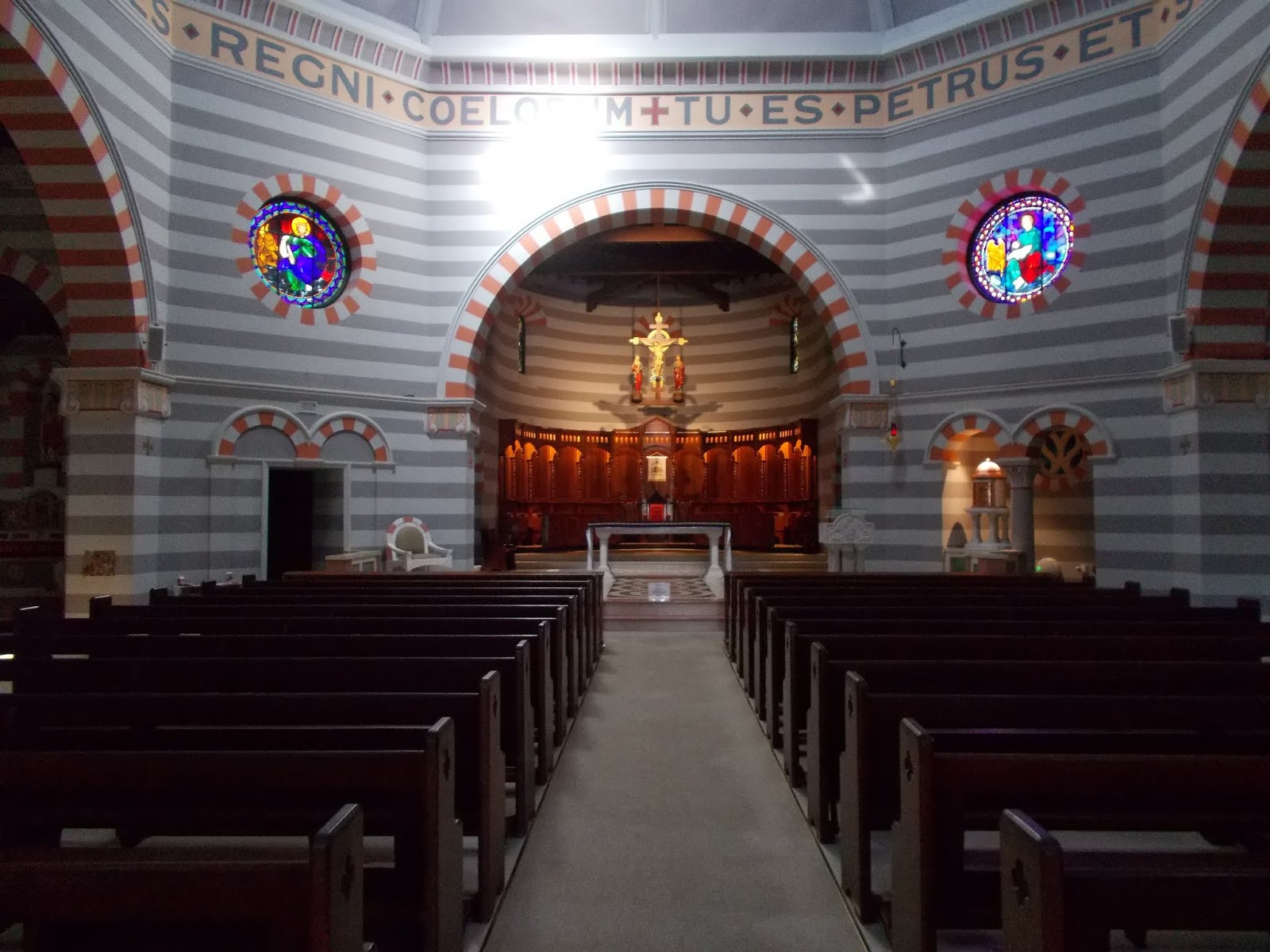
The last activity for the day was a tour of the Cathedral of St. Francis Xavier. This church was designed by John Cyril Hawes...the man who designed those other churches I showed in the last post! The more I learned about this man, the more interested I am! Mr. Hawes became an architect, and then an Anglican Deacon. He later converted to Catholicism and became a priest, and then later a bishop. 


Fr. Hawes designed and built many churches in this area. This interior was painted to resemble marble work in churches in Europe. In the past few years, a multi-million dollar renovation was completed on the building.


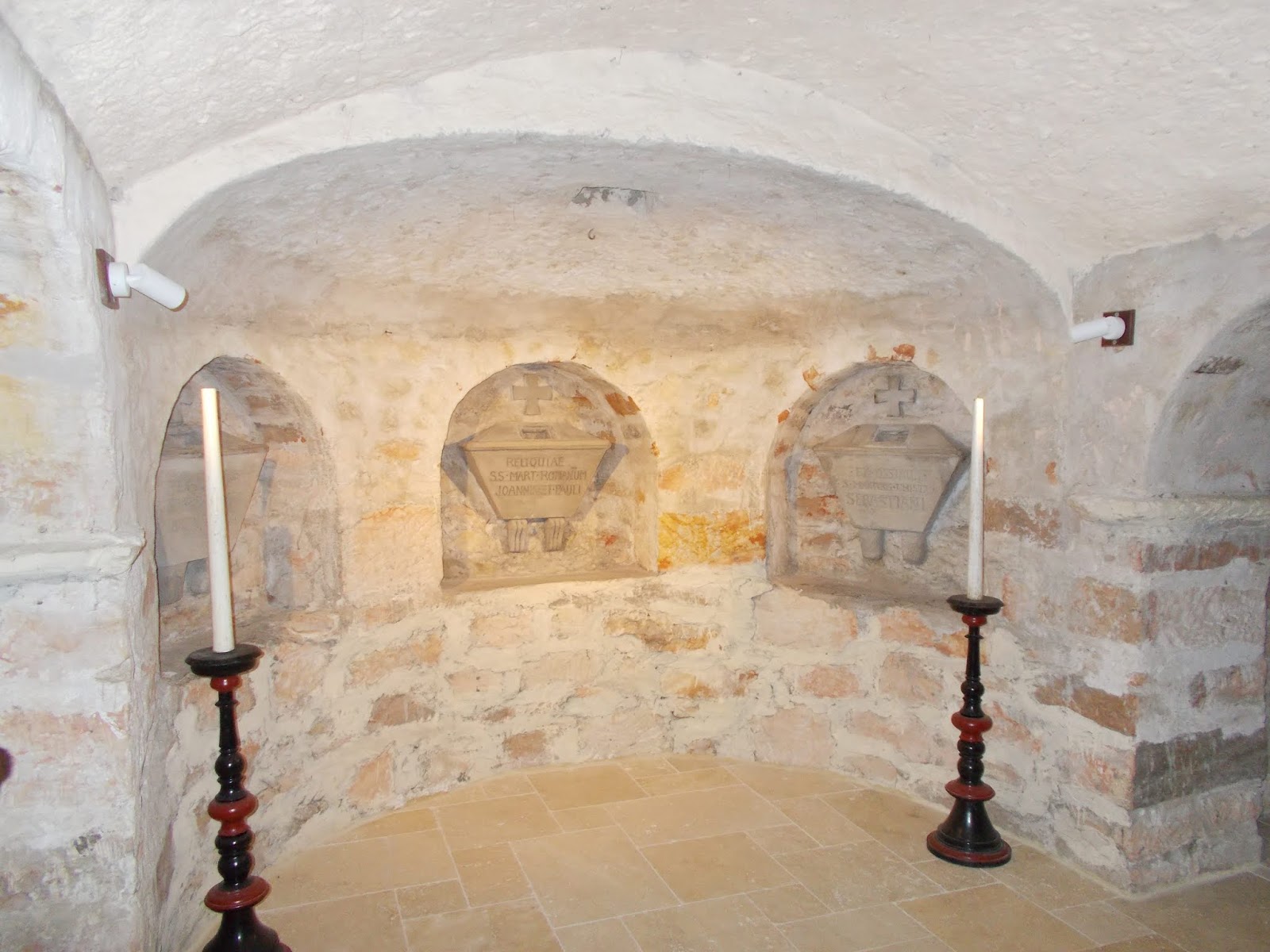
The crypt.


An Australian exit sign showing me how to get out of the crypt.


One of many stained glass windows designed by a lady whose name I haven't found yet. The unique thing was that these windows open. In Australia, you need to open the windows!
https://www.geraldtondiocese.org.au/index.php?option=com_content&view=article&id=9&Itemid=11


Elphin Grove Farm-East Sassafras, Tasmania

Elphin Grove Farm in East Sassafras, Tasmania. Doesn't that sound like the most magical place in the world one could live? Lesley and I...